Men’s Beard Color Service for a Natural Finish
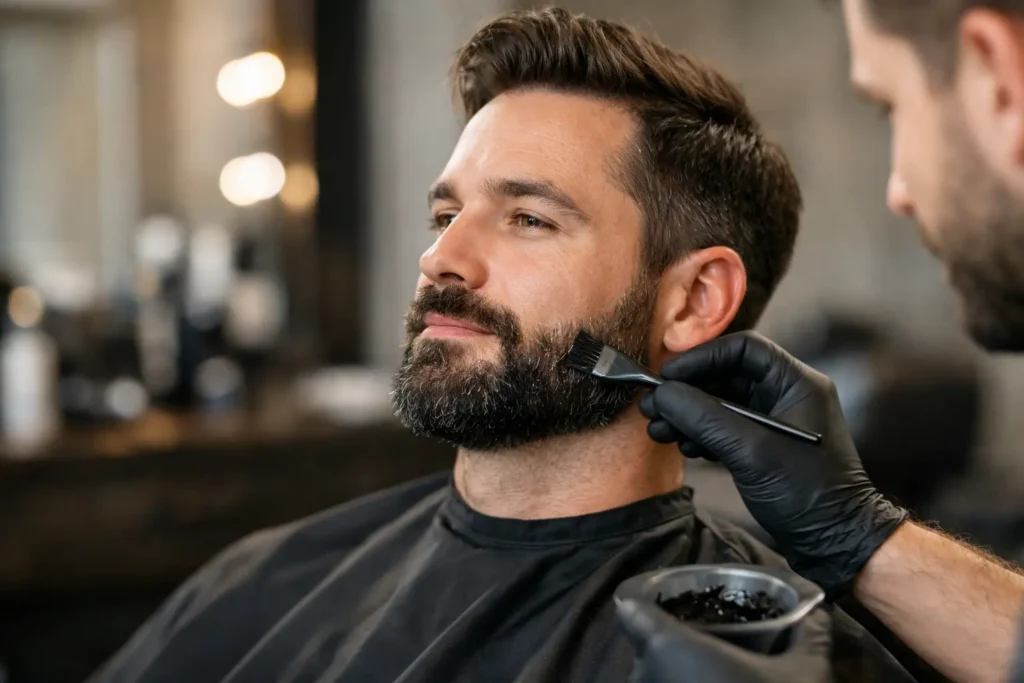
Gray in the beard rarely shows up evenly. A few lighter hairs at the chin, a silver patch near the sideburns, or a mustache that looks lighter than the rest can change the entire shape of your face. A professional men’s beard color service is built to correct that unevenness with control, giving your beard a stronger, more intentional finish without making it look painted on.
For many men, the goal is not to erase every sign of gray. It is to look rested, polished, and well maintained. The right color work can add depth to a patchy beard, soften high-contrast gray, make a beard look fuller, or bring facial hair and haircut into better balance. Like a precise lineup or a clean taper, the best result looks like it belongs to you.
What a Men’s Beard Color Service Should Do
Beard coloring is more detailed than applying a single dark shade and sending you out the door. Beard hair is often coarser than scalp hair, and the color can vary from one area to another. The skin underneath is also more visible, particularly along the cheeks, mustache, and chin. That is why application, timing, and shade selection matter.
A skilled barber starts by looking at your natural beard color, the amount and placement of gray, your skin tone, and the look you want to maintain. A professional who wears his beard close and clean may want a subtle reduction in gray. Someone with a fuller beard may want richer dimension that makes the shape look denser. Neither approach is better. The right choice depends on how natural or defined you want the finished beard to feel.
The service should also respect the lines of the beard. Color near a crisp cheek line or detailed mustache requires a careful hand. Sloppy placement can leave skin stained or make a naturally shaped beard look artificially boxed in. Precision is the difference between color that supports the haircut and color that becomes the first thing people notice.
Natural Color Is About Tone, Not Just Darkness
The most common mistake in beard coloring is choosing a shade that is too dark. Men often assume darker means younger, but a beard that is much darker than the hair on your head can look severe and draw attention to itself. The same is true when a warm beard is colored with an overly cool tone, or when a naturally mixed beard is turned into one flat block of color.
A natural result usually comes from working with your existing color instead of fighting it. Warm brown, ash brown, black, and salt-and-pepper tones all reflect light differently. Your barber may recommend a shade slightly lighter than you expected because beard color develops strongly on coarse hair. That lighter choice can create a more believable finish once the beard is dry, shaped, and viewed in daylight.
Gray coverage also does not have to be absolute. Leaving a controlled amount of silver around the chin or sideburns can look distinguished, especially when the beard is freshly trimmed and the neckline is clean. Full coverage suits some clients. Blended coverage suits others. The key is selecting a result that matches your age, haircut, wardrobe, and personal style rather than chasing a generic before-and-after photo.
Match the color to your grooming routine
Your maintenance habits should influence the service. If you come in regularly for beard trims, lineups, and haircuts, you can maintain a more tailored color result with predictable touch-ups. If you prefer longer stretches between appointments, a softer blend is often the smarter move because regrowth and returning gray will be less obvious.
Men with very short stubble face a different trade-off. Color can make stubble look stronger, but it will grow out quickly as the hair is trimmed down. A fuller beard gives color more room to blend and can hold a dimensional result longer. Your barber can help you decide whether color makes sense for your current length or whether growing the beard out first will deliver a better finish.
What to Expect During Your Appointment
A quality beard color appointment begins with a consultation, even if you have colored your beard before. Your barber should ask whether you want complete gray coverage, gray blending, added depth, or correction for uneven tone. This is also the time to mention sensitivity, previous reactions to color products, and your usual at-home grooming products.
The beard is then cleaned and prepared so oils, balms, and product buildup do not interfere with even color development. Your barber applies the selected formula with attention to the densest areas, gray patches, and edges of the beard. The processing time is monitored closely. Leaving color on too long can create a result that is darker, flatter, or less natural than intended.
After the color is removed, the real refinement begins. A beard trim, lineup, or straight-razor cleanup can bring out the full value of the service by sharpening the beard’s architecture. Color adds visual density, but shape creates authority. When both are handled with intention, the beard looks cleaner from every angle.
At Dr. Beard Barbershop, beard color can be paired with the grooming details that make the result feel complete: a precise trim, defined lines, a polished haircut, or a relaxing hot lather shave around the areas you keep clean. It is a practical way to handle your appearance in one appointment instead of piecing together separate services.
How Long Does Beard Color Last?
There is no single timeline because beard color is affected by hair texture, gray percentage, skin oils, washing habits, sun exposure, and the products you use. In general, a beard color service can remain strong for several weeks, while new growth becomes visible based on how quickly your facial hair grows. Men with concentrated gray at the chin or mustache may notice regrowth sooner than men whose gray is scattered throughout the beard.
Frequent cleansing with harsh shampoos can fade color faster. So can very hot water, aggressive scrubbing, and products that strip the beard of its natural oils. Use a beard-friendly cleanser, rinse with lukewarm water, and condition the hair as needed. Beard oil or balm can improve softness and manageability, but apply it after the beard is clean and dry rather than using it to mask dryness or product buildup.
Touch-up timing should be based on what you see in the mirror, not a rigid calendar. If the color still blends naturally but the shape has started to lose definition, schedule a trim and lineup first. If the gray has become the focus, it may be time for color maintenance. A barber can help you establish a routine that keeps the result sharp without overprocessing the beard.
Why Professional Application Beats the Box
At-home beard dye can appear convenient, but the risks are easy to underestimate. The formula may develop darker than expected, stain the skin, miss uneven sections, or leave a hard line at the edges. A patch test is essential with any color product, particularly for facial skin, which can be more sensitive than the scalp.
Professional service brings better judgment to the process. Your barber can adjust the shade, control the placement, and work around the beard’s natural density rather than applying the same treatment everywhere. Just as important, you get a clean shape after the color is complete. That finishing work is what keeps a color service from looking like a quick cover-up.
A beard should frame your face, not compete with it. Choose color that looks believable, maintain the shape with purpose, and let the finished result do what great grooming always does: make confidence look effortless.
Visit Dr. Beard Barbershop
Explore our grooming services and plan your next visit.
Visit Dr. Beard Barbershop in Anaheim or our Anaheim Hills location for appointments and shop details.
Get directions: Anaheim | Anaheim Hills.