How to Communicate Haircut Preferences Clearly
A great haircut rarely starts with the first pass of the clippers. It starts with a clear conversation. Knowing how to communicate haircut preferences gives your barber the direction needed to create a cut that works with your face shape, hair texture, daily routine, and personal style – not just the style you saw on someone else.
The goal is not to learn barber language before you sit down. A skilled barber should make the process approachable. Your job is to bring a realistic vision, explain what has or has not worked before, and speak up while there is still time to adjust. That is how you leave the chair looking sharp and feeling like the cut was built for you.
Start With the Look You Want to Project
Before discussing fade numbers or exact inches, think about the result you want your haircut to deliver. Are you aiming for a clean, corporate appearance? A textured, modern style with more movement? A classic side part? Something low-maintenance that still looks intentional after a workout or a busy week?
Those details give your barber useful context. Saying, “I want something polished for work but not overly tight,” creates a better starting point than simply asking for “a regular haircut.” If your appearance needs to move easily between the office, weekends, and special occasions, say that too. Your barber can balance clean lines with enough length and texture to keep the cut versatile.
Your lifestyle matters as much as your inspiration. A high-maintenance style may look excellent when professionally finished, but it can be frustrating if you do not have time for blow-drying, product, or frequent cleanups. Be honest about how much effort you are willing to put in each morning.
Bring Photos, but Explain What You Like About Them
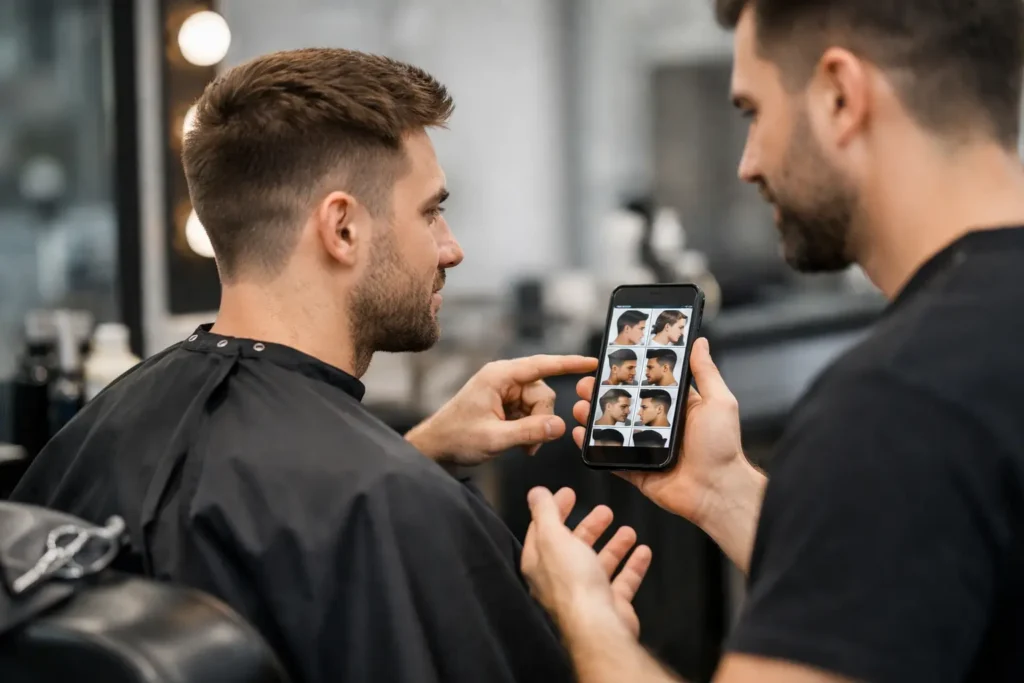
Reference photos are one of the best ways to communicate haircut preferences, especially when you are trying a new style. They show the overall shape, length, and finish you have in mind faster than a long description can.
Still, a photo is a reference, not a blueprint. The person in the image may have thicker hair, a different hairline, more density in the beard, or a completely different head and face shape. Rather than saying, “I want this exactly,” point to the parts that appeal to you. You might say, “I like how clean the neckline is,” “I want this amount of texture on top,” or “I like that the sides are blended but not taken down to skin.”
Bring two or three photos when possible. One can show the front, another the side, and another the general finish you prefer. Photos of your own past haircuts are even more valuable. If a previous cut was your best look, show it. If one went too short or grew out awkwardly, that is useful information as well.
Describe Length in Practical Terms
“Short on the sides and longer on top” can mean a dozen different things. Give your barber more to work with by describing how you want the hair to sit and behave.
For the top, explain whether you want it long enough to sweep back, part to the side, wear forward, create curls, or add texture. If you know an approximate length, share it, but do not worry if you do not. Showing where you want the hair to fall with your fingers can be clearer than guessing inches.
For the sides, tell your barber whether you want a skin fade, a close taper, a classic scissor cut, or enough length to keep your scalp from showing. If you have had fades before, explain what you liked. A low fade stays closer to the ears and neckline, while a mid or high fade creates a stronger contrast. None is automatically better. The right choice depends on your style, hair growth pattern, and how bold you want the finished cut to look.
Also explain your comfort level with short hair. If you have ever felt exposed after a cut that was too tight around the temples or crown, say so before the clippers come out. “Keep some weight on the sides” is a simple request that can prevent an overly aggressive result.
Talk About Your Hairline, Cowlicks, and Growth Patterns
The details you may see as problems are often the details that help a barber personalize your haircut. Mention a stubborn cowlick, a widow’s peak, thinning at the crown, uneven density, or a beard that grows fuller on one side. These are not reasons to avoid a style conversation. They are reasons to have one.
For example, forcing a sharp forward fringe over a strong cowlick may create a daily styling battle. A barber can recommend a shape that works with the natural direction of your hair instead. Similarly, a hard, sharply lined hairline can look crisp, but it may require regular maintenance and may not be the best choice for every hairline. A softer, natural finish often grows out more gracefully.
This is where professional advice earns its value. Come in with a preference, but stay open to adjustments that make the style more wearable between appointments.
Be Specific About the Neckline and Sideburns
Many men focus on the fade and top length, then overlook the details that make a haircut feel finished. Your neckline and sideburns influence how clean the cut looks as it grows out.
Tell your barber if you prefer a tapered neckline, a natural neckline, or a defined squared finish. A tapered or natural neckline tends to grow in softer and can extend the time between visits. A squared neckline looks crisp immediately after the service but may show regrowth faster. The choice comes down to the level of sharpness you want and how often you plan to maintain it.
Sideburns should also connect naturally to your haircut and beard. If you wear facial hair, mention whether you want the sideburns blended into the beard, kept slim, or left fuller. A strong haircut and an unbalanced beard can compete with each other. A thoughtful transition gives your entire profile a more intentional look.
Treat Your Beard as Part of the Haircut Conversation
Your beard changes the visual balance of your face, so it should be part of the plan from the beginning. If you are getting both services, explain whether you want the haircut to flow into a full beard, a close-cropped beard, or a clean-shaven jawline. Your barber can shape the proportions so the hair and beard complement each other.
Be clear about what you want from the beard service. A cleanup is different from a reshape. A cleanup removes loose growth and restores existing lines. A reshape may change the cheek line, neckline, bulk, length, and overall silhouette. If you are growing your beard out, say so. The right service may focus on removing weight in strategic places while protecting your progress.
Ask for a mirror check before major length comes off, particularly if you have spent months building fullness. Precision beard work should enhance your natural growth pattern, not make your beard look overworked.
Speak Up During the Service
You do not need to micromanage the chair, but you should not wait until the cape comes off to mention a concern. If the fade looks higher than you expected, the top feels shorter than planned, or the beard line is moving in a direction you did not discuss, say something early and respectfully.
Simple phrases work well: “Can we keep a little more length there?” “Could we blend that softer?” or “I was picturing the line slightly lower.” A professional barber wants to know while an adjustment is still possible.
The same goes for the final styling. Pay attention to how the cut looks after product is applied, but ask to see it with a natural finish too if that is how you usually wear it. A haircut should hold its shape beyond the first hour after your appointment.
Ask What to Maintain at Home
Before you leave, ask what product and routine will support the haircut you chose. The right answer depends on your hair. Fine hair may need a lighter styling product for volume, while thick or coarse hair may need stronger hold and controlled moisture. Textured styles can benefit from matte products; polished styles may call for a cream or pomade with more shine.
You should also ask when to return. A skin fade or sharp beard lineup may need attention in two to three weeks. A longer scissor cut or natural neckline can often go longer. Regular maintenance keeps a strong shape from turning into a corrective appointment.
At Dr. Beard Barbershop, the consultation is part of the craftsmanship. Bring your references, explain your routine, and be direct about the result you want. The best haircut is not the trendiest one in the room. It is the one that looks right on you, works on an ordinary Tuesday morning, and gives you the confidence to show up well wherever the day takes you.
Visit Dr. Beard Barbershop
Explore our Gentleman’s Cut and plan your next visit.
Visit Dr. Beard Barbershop in Anaheim or our Anaheim Hills location for appointments and shop details.
Get directions: Anaheim | Anaheim Hills.