Can Fades Hide Thinning Hair? Choose the Right Cut
A receding corner, a thinner crown, or less density through the top can make every haircut decision feel higher stakes. So, can fades hide thinning hair? Often, yes – but only when the fade, top length, and styling direction work with your actual growth pattern. A sharp fade can create a cleaner overall shape and make thinning feel intentional. The wrong one can put a spotlight on the exact area you hoped to soften.
Can Fades Hide Thinning Hair? Yes, With the Right Contrast
A fade reduces the hair gradually from longer near the top to shorter around the sides and back. That change in length creates contrast, which can help the top appear fuller by comparison. It also removes visual bulk at the sides, where extra width can make a thinning top or receding hairline look more pronounced.
The goal is not to pretend thinning does not exist. It is to build a haircut that looks balanced, deliberate, and easy to maintain. For many men, that means keeping the sides tight enough to sharpen the profile while leaving enough controlled texture on top to avoid exposing the scalp.
A fade is especially useful if your thinning is mild to moderate and concentrated at the temples, front hairline, or crown. It can also be a strong option if you are ready for a shorter style that feels polished at the office and clean on the weekend.
That said, a fade is not a one-size-fits-all fix. Skin taken too high around the sides can make a thin top look even thinner. Heavy product, a hard part, or a severe disconnect between the sides and top can create the same problem. Precision matters more than simply going shorter.
Where You Are Thinning Changes the Best Fade
A great barber starts with the hair pattern, not a photo of someone with completely different density. The location of thinning determines where to keep length, where to remove weight, and how high the fade should rise.
Thinning at the temples or a receding hairline
A low or mid fade usually works well for recession at the corners. It keeps the cut clean without pushing the contrast too aggressively toward the hairline. On top, a short textured crop, a loose forward style, or a modest quiff can soften the transition at the temples.
Avoid forcing a long, slicked-back style when the front has lost density. Pulling the hair tightly away from the face can make recession more visible and place too much attention on the hairline. A natural, textured finish tends to look more current and more forgiving.
Thinning at the crown
Crown thinning requires a careful balance. Keeping some length and texture on top can help diffuse a sparse area, but excessive length may separate and reveal more scalp. A mid fade paired with a short, blended top often gives the crown a more even appearance.
Your barber may recommend styling the hair slightly forward or diagonally rather than straight back. The right direction can create coverage without looking like a comb-over. The difference is subtle: the hair should look like it is falling naturally, not being strategically stretched across a spot.
Diffuse thinning across the top
When density is reduced across the whole top, shorter is often stronger. A high-and-tight fade, crew cut, short crop, or close buzz can make the overall look appear more uniform. Trying to preserve too much length may create separation and make the thin areas stand out.
This is where confidence carries the style. A close fade with an intentional top length reads as sharp, masculine, and maintained. It also makes daily styling faster, which is a real advantage for men who want a dependable grooming routine.
Choosing Between Low, Mid, and High Fades
The height of the fade is not just a trend decision. It controls how much attention moves toward the top of the head.
A low fade keeps the graduation closer to the ears and neckline. It is the safest starting point for many men with early thinning because it preserves more softness and balance around the head. It works particularly well with short textured tops and conservative professional styles.
A mid fade is more defined and can create a stronger, cleaner silhouette. It suits men who still have enough density on top to support a textured crop, short pompadour, or brushed-forward style. It is often the sweet spot between classic barbering and modern edge.
A high fade creates the boldest contrast. It can be excellent for men who are embracing a short top, buzz cut, or closely cropped style. But when the top is noticeably sparse, a high fade can make that contrast too dramatic. The cleaner the sides become, the more the eye travels upward.
The best choice depends on your head shape, hair color, density, and lifestyle. Dark hair against lighter scalp skin may show thinning more clearly than lighter hair, for example. A skilled barber considers these details instead of applying the same fade to every client.
Top Styles That Pair Well With a Fade
The top of the haircut does most of the visual work. A fade supports it, but the cut above the fade determines whether the style creates density or reveals it.
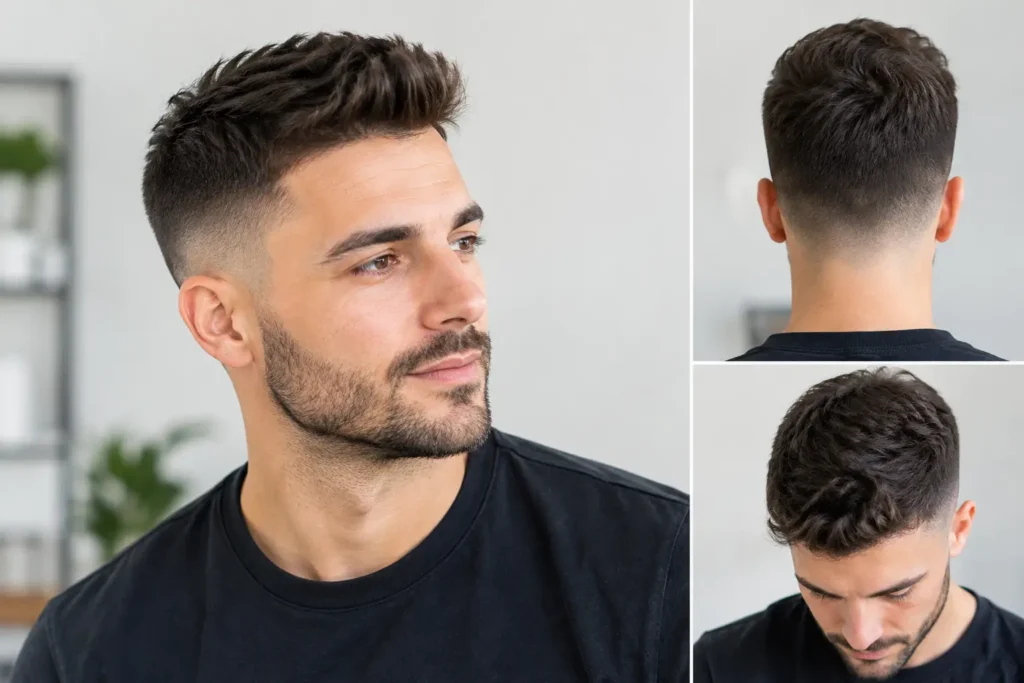
A French crop or textured crop is one of the most reliable choices for thinning hair. The hair is kept short, broken up with texture, and often directed slightly forward. This reduces the appearance of separation while giving the cut a modern, intentional finish.
A short crew cut is another strong option. It leaves enough length on top to shape without demanding thick coverage. Paired with a low or mid fade, it delivers a clean, professional look that holds up well between appointments.
For men with more density through the front, a short quiff can work. Keep it controlled rather than tall and heavily sculpted. A modest lift adds shape, while an oversized quiff can expose thinner areas behind it.
If thinning is advanced, a buzz cut with a fade may be the most confident move. It minimizes the contrast between dense and sparse zones and puts the focus on a clean outline, a precise neckline, and well-maintained facial hair. For men with a beard, that balance can be especially powerful: a sharp beard shape adds structure to the face while the haircut stays crisp and uncomplicated.
Styling Makes the Fade Work Harder
The right styling product can make a meaningful difference, but it cannot manufacture density. What it can do is add texture, control shine, and prevent the hair from separating into thin-looking strands.
Matte clay, texture powder, and lightweight styling paste are generally better choices than wet-look pomades or gels. Shine reflects light off the scalp and can make sparse areas more obvious. Matte products create a fuller-looking finish and provide grip without flattening the hair.
Use less product than you think you need. Work it through dry or nearly dry hair, then use your fingers to create separation and movement. Fine hair usually looks fuller with a textured, slightly imperfect finish than with a perfectly combed surface.
Be realistic about camouflage products as well. Hair fibers can help for a special event or photo-ready finish, particularly around a thinning crown, but they are not a replacement for a well-designed cut. A strong foundation always looks better than a quick cover-up.
What to Ask Your Barber
Clear communication helps your barber build a fade that works beyond the first day. Mention where you notice thinning most, whether you style your hair every morning, and how short you are comfortable going. If you wear glasses, a beard, or keep a clean-shaven face, say so – those details affect the balance of the finished look.
Instead of asking only for a number on the sides, ask for a recommendation based on your density. A useful conversation might sound like: “My crown is getting thinner. Would a low or mid fade keep the top looking balanced?” That gives your barber room to tailor the cut instead of following a generic request.
At Dr. Beard Barbershop, a precise consultation is part of the service. The best result comes from assessing your hairline, crown, growth direction, face shape, and grooming routine together. That is how a fade becomes a custom look rather than a standard setting on the clippers.
Keep the Look Sharp Between Visits
Fades look their best when the edges stay clean. Depending on how tight you wear the sides, most men benefit from a refresh every two to four weeks. Waiting too long lets the fade lose its shape, which can make the whole haircut feel less intentional.
If you are noticing increased shedding, sudden patchy loss, itching, or scalp irritation, speak with a dermatologist or qualified medical professional. A barber can help you choose a flattering style and maintain it with precision, but hair loss concerns sometimes deserve medical guidance as well.
A good fade does not need to hide who you are. It should frame your best features, make thinning less of a distraction, and leave you looking like you chose the style on purpose. That kind of confidence is always worth maintaining.
Visit Dr. Beard Barbershop
Explore our Signature Cut and plan your next visit.
Visit Dr. Beard Barbershop in Anaheim or our Anaheim Hills location for appointments and shop details.
Get directions: Anaheim | Anaheim Hills.