Why Do Beard Lines Look Uneven? Fix the Shape
A beard can be full, healthy, and well cared for yet still look slightly off in the mirror. If you have wondered, why do beard lines look uneven, the answer is rarely that one side simply grew wrong. More often, it is a combination of natural facial asymmetry, inconsistent density, growth direction, and a lineup that does not work with your actual face shape.
A sharp beard is not about forcing two identical lines onto two sides of an imperfectly symmetrical face. It is about creating balance. When the cheek, mustache, jaw, and neckline work together, your beard looks intentional from every angle – whether you are heading into the office, meeting clients, or stepping out for the weekend.
Why Do Beard Lines Look Uneven in the Mirror?
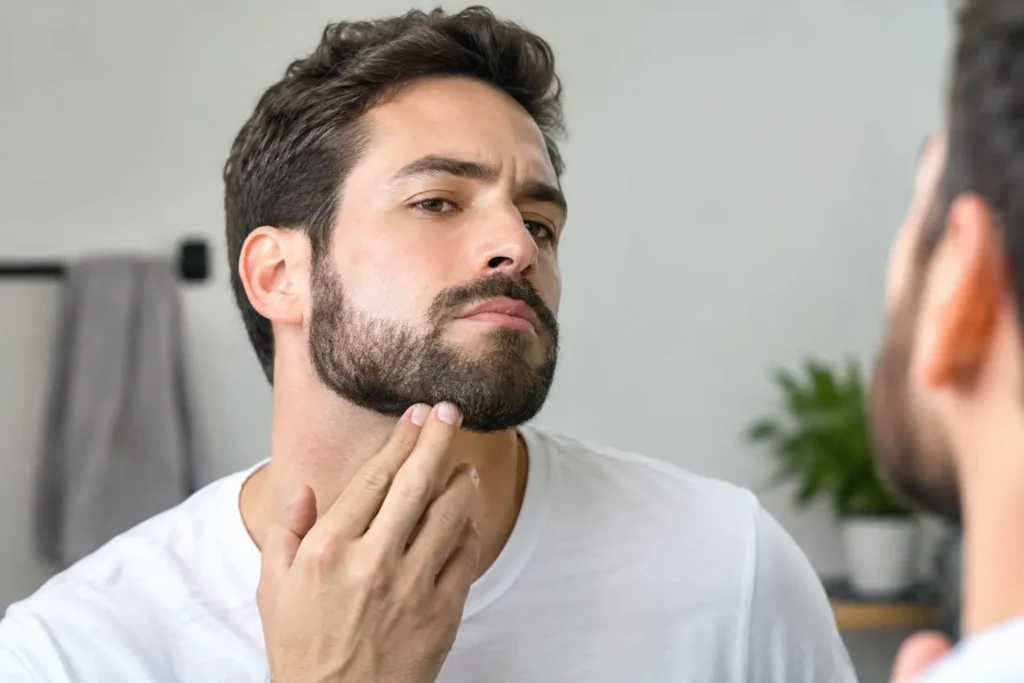
Your face is not perfectly symmetrical, and neither is your beard. One jaw may sit a little wider, one cheek may be fuller, or one side of your mouth may naturally rest higher. Those differences are normal, but a hard beard edge can make them more visible.
The mirror can also be misleading. You are usually standing close, checking details under overhead bathroom lighting. That lighting creates shadows below the jaw and along the cheeks, exaggerating sparse areas and making one line appear higher or darker than the other. A beard that looks uneven at six inches from the mirror may look balanced at normal conversation distance.
The real test is how the shape reads from the front and at a slight angle. A professional barber looks at both, then adjusts the outline to create visual balance rather than chasing mathematical symmetry.
Your Growth Pattern Sets the Boundaries
Beard hair does not grow in a uniform direction. On one side, hairs may grow downward and lie flat. On the other, they may angle toward the ear, curl outward, or grow into a thinner patch. When those hairs are brushed differently, the natural edge can look crooked even after a fresh trim.
Density matters just as much. A dense cheek line creates a dark, clear border, while a thinner side fades into the skin. If you cut both sides at the same height without accounting for that contrast, the lighter side can appear higher, lower, or less defined. The right approach may mean leaving a little more natural fullness on the thinner side rather than cutting deeper to match the other.
Common Reasons Beard Lines Lose Their Balance
An uneven beard line usually develops through small grooming decisions, not one major mistake. The most common issue is trimming too aggressively. A man sees a stray hair above the cheek line, removes it, then notices another hair farther down. Before long, the line has crept lower than intended.
Overusing a close-detail trimmer can create the same problem around the mustache and jaw. A trimmer with a narrow blade is excellent for refining an established shape, but it makes it easy to carve a line that is too sharp, too high, or too disconnected from the rest of the beard.
Necklines are another frequent source of trouble. When the neckline is cut too high, the beard loses weight under the jaw and can make the face look longer or weaker in profile. When it sits too low or is left undefined, the beard can appear unfinished. For most men, the cleanest neckline follows a gentle curve above the Adam’s apple, but the exact placement depends on neck length, beard density, and desired style.
Your haircut can change how the beard reads, too. A tight fade, a longer textured cut, or extra volume at the sides all affect facial proportions. Beard shaping should be considered alongside the haircut so the complete look feels connected rather than pieced together.
The Difference Between Symmetry and Balance
Perfectly level cheek lines are not always flattering. If one cheek naturally sits higher, forcing the lower side up to match can remove valuable density and make the whole beard look too narrow. Likewise, forcing a high cheek line can look artificial on a man with patchier upper-cheek growth.
Balance is more useful than symmetry. The barber’s eye should consider the width of the jaw, the fullness of the chin, the shape of the sideburns, and where the mustache meets the beard. A slightly different line on each side can create a finished result that looks more even overall.
This matters especially for shorter beards. With close stubble or a short boxed beard, every edge is visible. Small variations in line placement stand out because there is less length to soften them. Longer beards offer more flexibility, but they still need controlled bulk and a clean neckline to avoid looking lopsided.
Patchiness Can Make a Straight Line Look Crooked
Patchy growth is not a grooming failure. It is simply part of your beard’s natural character. The mistake is trying to fix it by taking more off the stronger side until both sides are equally sparse.
Instead, choose a length and shape that support your densest areas. A slightly longer beard can help sparse zones blend into the overall form. A softer cheek line may look more natural than a severe carved edge. Beard color can also affect perceived density, particularly when lighter hairs disappear against the skin. For some clients, a subtle professional color service adds definition without making the beard look painted on.
How to Check Your Beard Lines Before You Trim
Start with a clean, dry beard. Wet hair appears longer and lays flatter, so trimming immediately after a shower can lead to taking off more than you intended. Brush or comb the beard in its natural direction, then look at it in bright, even light.
Step back from the mirror. Check the front view first, then turn your head slightly to each side. Instead of comparing individual hairs, compare the overall silhouette: the height of the cheek lines, the width through the jaw, the fullness at the chin, and the transition from sideburn to beard.
Use a second mirror or your phone camera to inspect your profile. This is where an overly high neckline, bulky jaw area, or weak chin shape becomes easier to spot. If you are unsure whether a hair should go, leave it. You can always refine later, but hair removed from a key area may take weeks to recover.
A Better At-Home Approach to Beard Lineups
For maintenance between appointments, keep the goal modest. Remove only obvious strays outside your established shape. Use a guarded trimmer for bulk, a detail trimmer for limited edge cleanup, and a razor only where you are confident about the boundary.
Do not begin by trying to redraw both cheeks. Work from the stronger, more natural-looking line, then clean the other side only enough to create balance. Keep your hand light. Pressing a trimmer into the skin can pull hairs down and produce an uneven cut once they spring back.
Beard oil or balm can help you judge the shape correctly by training hairs to lie in their intended direction. This is especially useful for wiry cheeks, a curly mustache, or a beard that flares at the jaw. Product will not fix a poor outline, but it can reveal whether the issue is truly the line or simply unruly growth.
If you maintain a corporate look, a tighter cheek and neckline may suit your routine. If you prefer a fuller, more expressive beard, softer lines and controlled natural texture often look stronger. Neither choice is automatically better. The best beard shape is the one that fits your face, growth pattern, and how much maintenance you are willing to keep up with.
When a Professional Beard Lineup Makes Sense
A professional beard service is worth it when you have lost the outline, are growing into a new style, or keep correcting one side until the beard gets smaller every week. An experienced barber can reset the structure, account for uneven density, and establish a shape that is easier to maintain at home.
At Dr. Beard Barbershop, beard artistry is treated as part of your complete presentation, not as a quick pass with a trimmer. A precise lineup, beard trim, straight-razor cleanup, or hot lather shave can bring control back to the details while keeping the result suited to your personal style.
Let your beard grow for a few days before a corrective appointment if you can. That gives the barber enough length to see your real growth pattern and make smart decisions about the cheek line, neckline, and overall contour.
A beard does not need identical sides to look sharp. It needs a shape that respects your natural growth, supports your facial structure, and stays clean where it counts. When the lines are built for your face instead of against it, the result carries the kind of confidence people notice before they know why.
Visit Dr. Beard Barbershop
Explore our beard trim and lineup and plan your next visit.
Visit Dr. Beard Barbershop in Anaheim or our Anaheim Hills location for appointments and shop details.
Get directions: Anaheim | Anaheim Hills.