Can Beard Color Look Natural? Yes, With Precision
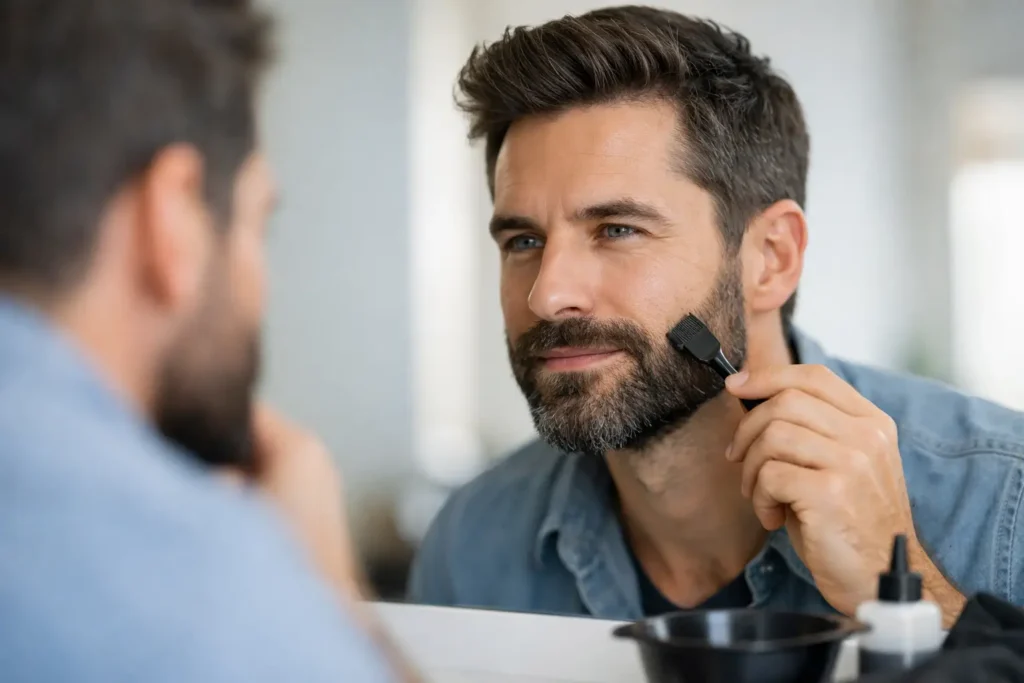
A beard that suddenly looks one flat, inky shade is not a confidence upgrade. It is a distraction. So, can beard color look natural? Absolutely – but the result depends far more on precision than on simply choosing a color labeled “brown” or “black.” The strongest beard color work preserves the dimension, texture, and character that make facial hair look like it belongs to you.
For men covering gray, evening out patchy areas, or adding a little more definition to a lighter beard, the goal should not be to create a painted-on mask. It should be a cleaner, more consistent version of your natural look. Done well, beard color can make your beard appear fuller, sharpen your overall presentation, and help your haircut, skin tone, and facial structure work together.
What Makes Beard Color Look Natural?
Natural beard color is rarely one solid color. Most beards contain variation: darker hairs around the chin, lighter growth through the cheeks, warmer tones in the mustache, and gray that may be concentrated at the sideburns or jawline. A believable color service respects that variation instead of trying to erase every trace of it.
The best shade is usually slightly softer than what a man assumes he needs. Choosing a color that is too dark is the most common way to get an obvious result, especially when the beard has significant gray or the hair on top is lighter. A skilled barber evaluates the contrast between your beard, scalp hair, complexion, and eyebrows before selecting the formula.
Placement matters just as much. Some clients need an all-over blend, while others benefit from targeted application around the mustache, chin, or patchier sections of the beard. If gray is naturally mixed throughout the beard, allowing a subtle amount of it to remain can often look more refined than covering it completely. The right result is not about pretending time has stood still. It is about looking polished, intentional, and well maintained.
Your Skin Tone Changes the Equation
Beard color can pull too cool, too warm, too red, or too black against the skin. That is why a shade that works for one man may look harsh on another. Men with warm or olive undertones often need a formula with controlled warmth, while cooler complexions may benefit from more neutral or ash-balanced tones. The answer is never as simple as matching the box to your natural hair color.
Your beard density also affects how a color reads. Dense facial hair holds more pigment and can look darker quickly. A lighter or more porous beard may absorb color differently, making timing especially important. This is craftsmanship, not guesswork.
Can Beard Color Look Natural When Covering Gray?
Yes, and gray coverage is where a customized approach earns its value. Gray beard hair is often more resistant than pigmented hair, but pushing the formula too dark or leaving it on too long creates an artificial, overly uniform finish. The better approach is to soften the contrast between gray and your natural beard color rather than forcing every hair into the same shade.
For a professional who wants to maintain a sharp appearance in meetings, photos, or client-facing work, a blended gray coverage can make a major difference without announcing itself. Your beard still looks mature and masculine. It simply looks more even.
Men with salt-and-pepper hair often look best when the beard keeps some of that natural distinction. Completely darkening a gray beard while leaving the scalp hair silver can create a disconnect. In that case, a softer blend or strategically reduced gray may be the more natural choice. Your barber should look at the complete picture, not treat the beard as a separate feature.
The Beard Shape Has to Support the Color
Color alone cannot fix an unstructured beard. In fact, added definition can make uneven lines, stray bulk, and dry ends more noticeable. A beard trim or lineup before coloring gives the service a stronger foundation, because the shape directs attention toward the jawline and away from unnecessary density.
A clean cheek line, balanced neckline, and controlled mustache create the frame. Color then adds depth within that frame. This combination is especially effective for beards that look thin in certain areas or have faded from sun exposure. It can make the beard read as fuller without resorting to an unrealistically dark shade.
The same principle applies to the transition from sideburns to beard. When that connection is shaped and blended properly, the color looks integrated with the haircut rather than abruptly beginning at the jaw. This level of detail is what separates routine maintenance from a refined grooming service.
Why At-Home Beard Dye Often Looks Obvious
At-home coloring can work for a minor touch-up, but it comes with trade-offs. Most retail formulas are designed to serve a broad range of hair types, shades, and application skills. They cannot account for your exact gray percentage, beard porosity, skin undertone, or preferred finish.
The biggest risk is choosing a shade that is too dark because it seems safer. On facial hair, dark color can develop fast and cling to dry areas, creating a dense, artificial appearance. Staining around the skin, uneven saturation, and missed areas near the mustache or sideburns can also weaken the result.
There is also the matter of timing. Beard hair is not scalp hair. It is usually coarser, can process inconsistently, and grows in several directions. A professional can monitor the development of the color, adjust the approach when needed, and remove it at the right moment. That control is often the difference between a subtle upgrade and an obvious dye job.
How to Keep Colored Facial Hair Looking Its Best
A natural-looking result needs sensible maintenance. Harsh cleansers, very hot water, and frequent scrubbing can fade color faster and leave beard hair dry. Use a beard-friendly cleanser, condition the hair as needed, and avoid treating facial hair like it is an afterthought in your shower routine.
Sun exposure, chlorine, and regular washing can shift or fade color over time. If your beard tends to turn warm or brassy, do not rush to apply more color at home. A barber can assess whether you need a refresh, a tonal adjustment, or simply conditioning and a clean shape-up.
Between appointments, beard oil or balm can help the hair lie smoother and reflect light more evenly. That matters because healthy, groomed texture makes color look richer and more natural. A dry, wiry beard can make even a perfectly selected shade appear dull or uneven.
When You Should Choose a Subtle Blend Instead
Not every beard needs full coverage. A subtle blend is often the right call if you are new to beard color, have only a few gray hairs, want to test a more polished look, or prefer low-commitment maintenance. It can reduce the strongest contrast while retaining enough natural variation to keep the result believable.
A blend is also smart for men who value an easy transition as color fades. Full coverage may demand more frequent upkeep, particularly if the gray growth at the roots is pronounced. A softer approach grows out with less of a visible line and can fit a busy schedule more comfortably.
At Dr. Beard Barbershop, beard color is best approached as part of a complete grooming plan: assess the beard, refine the shape, choose the right level of coverage, and finish with the kind of detail that makes the result feel like your own. Whether your style is clean corporate, modern and fashion-forward, or naturally rugged, the color should support it rather than compete with it.
The most natural beard color is the one no one thinks to question. It simply makes you look rested, intentional, and ready to walk into the room with more confidence.
Visit Dr. Beard Barbershop
Explore our grooming services and plan your next visit.
Visit Dr. Beard Barbershop in Anaheim or our Anaheim Hills location for appointments and shop details.
Get directions: Anaheim | Anaheim Hills.